cardiac therapeutics
Science
Genetic cardiomyopathies
Genetic Cardiomyopathies
Cardiomyopathies are diseases of the heart muscle that can affect how the heart pumps blood and conducts electrical signals.
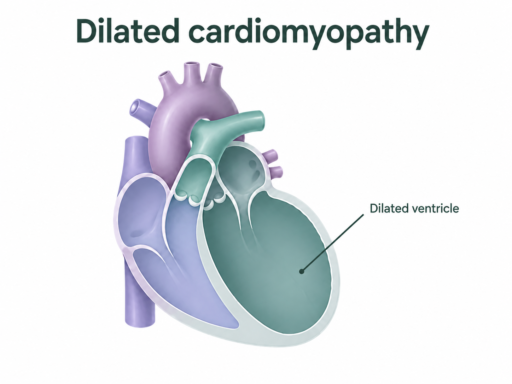
Dilated cardiomyopathy, or DCM, is one of the most common forms: the heart’s main pumping chamber can enlarge and weaken, which may lead to heart failure, abnormal rhythms, and, in some patients, advanced cardiac care. A genetic cause underlies a meaningful proportion of DCM, making genetic testing and family screening important in many patients. Lamin (LMNA) mutations account for approximately 5–8% of familial cases of DCM, positioning LMNA as one of the most frequently mutated genes causing the disease
Cardiac Laminopathies
Cardiac laminopathies are a distinct and often aggressive form of heart failure, caused by mutations in the LMNA gene. Although rare, LMNA-DCM carries a high clinical burden because it can affect patients earlier in life and may progress quickly. [5,8–10] No specific treatment is currently available for these patients.
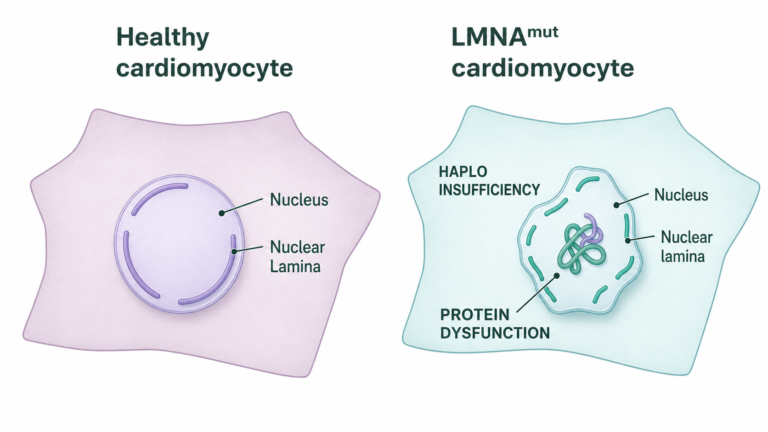
Not all LMNA variants act through the same mechanism. Some variants reduce the amount of functional Lamin A/C protein in the cell. This is called haploinsufficiency: one copy of the gene does not produce enough functional protein, and the resulting Lamin A/C level may be too low to support normal nuclear structure and function. [5–7,10]
Other variants may produce an abnormal Lamin A/C protein. In these cases, the altered protein may interfere with the normal lamin network and disrupt nuclear structure, cell signaling, and stress responses. This is often described as a dominant-negative mechanism. [5–7,10] These mechanisms matter because they may require different therapeutic strategies.
Other variants may produce an abnormal Lamin A/C protein. In these cases, the altered protein may interfere with the normal lamin network and disrupt nuclear structure, cell signaling, and stress responses. This is often described as a dominant-negative mechanism. [5–7,10] These mechanisms matter because they may require different therapeutic strategies.